With the tightening of global environmental policies and the continuous growth of market demand for recycled plastics, more and more recycling companies are facing pressure to expand production capacity, but at the same time, they must strictly control operating costs and avoid transferring them to downstream customers. How to find a balance between "expansion" and "cost control" has become a key challenge in the industry.
Industry Background: Opportunities and Needs Coexist
According to industry research, the demand for high-quality recycled plastics in the end market is rapidly increasing, especially for commonly used materials such as PET, where the performance gap between recycled materials and raw materials is rapidly narrowing. The McKinsey research report further points out that the plastic circular economy is currently in a "unique window of opportunity", with policy promotion, consumer awareness enhancement, and technological innovation jointly driving the market's transition to a circular model. However, traditional recycling methods have limitations in terms of production capacity and material processing range, and there is an urgent need for systematic upgrading.
Core Strategy: System Optimization and Technology Upgrade
Scaling up does not necessarily mean complete replacement or massive capital investment. Through targeted optimization and upgrading, enterprises can achieve a leap in production capacity on the existing basis:
- System layout and process optimization
Redesign the material flow path, reduce intermediate handling and waiting time, and improve the overall collaborative efficiency of the production line. Reasonable division of pre-processing, sorting, crushing, cleaning, granulation and other areas can achieve continuous operation, reduce energy consumption and manual intervention.
- Key equipment upgrade and automation
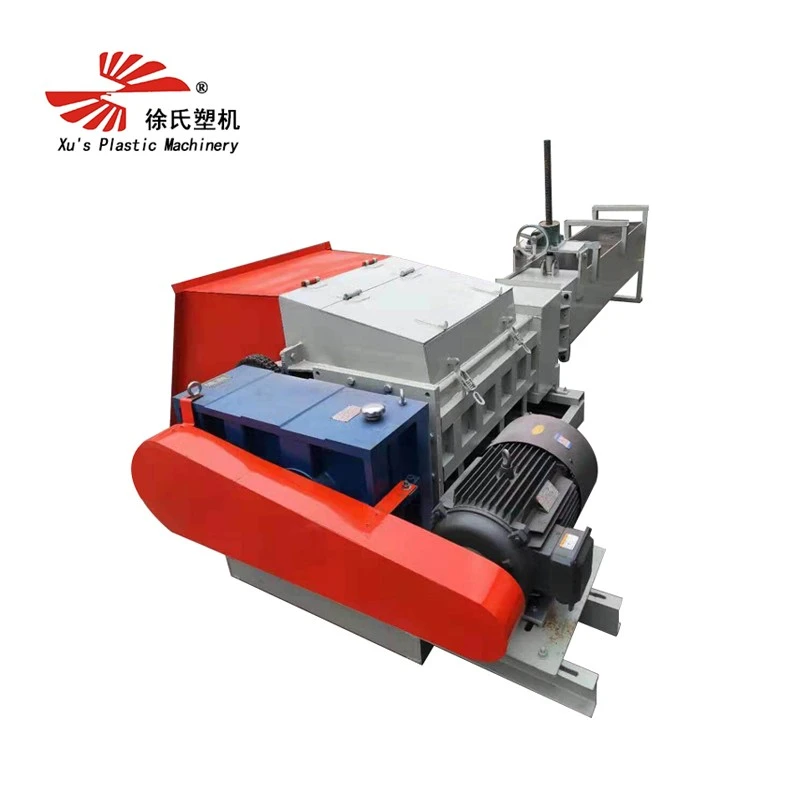
Upgrade equipment for bottleneck links without the need for whole line replacement. For example, introducing intelligent sorting machines (such as near-infrared sorting technology) to improve sorting accuracy and speed; Using efficient and energy-saving crushers and granulators to process more materials with the same power consumption. The addition of automated control systems can also stabilize process parameters, reduce human error and downtime.
- Energy and Resource Recycling
The recycling process itself should also follow the principle of recycling. Energy consumption per unit of production capacity can be reduced by installing heat recovery systems, using efficient motors, optimizing heating and cooling processes, and other methods. At the same time, achieving the recycling and reuse of cleaning water reduces water resource consumption and wastewater discharge.
The role of advanced recycling technology
In addition to optimizing traditional mechanical recycling, advanced recycling technologies such as chemical recycling are becoming a powerful supplement to scaling up. This type of technology can process plastic waste that is difficult to handle through mechanical recycling (such as multi-layer composite packaging, heavily polluted films, etc.), and convert it into cracking oil or monomers, which can be reused to produce native quality plastics. The McKinsey report emphasizes that although this type of technology requires high initial investment, in the long run, it can improve economic efficiency by processing low value waste plastics and producing high-value raw materials, and form a complementary system with mechanical recycling.
Implementation path suggestions
Enterprise expansion should adopt a phased and modular approach:
Assessment and diagnosis: Firstly, analyze the capacity bottlenecks and energy consumption hotspots of the existing production line.
Priority upgrade: Targeting equipment or processes with the highest return on investment in critical processes.
Integrated debugging: Ensure seamless integration between new modules and existing systems, achieving a synergistic effect of 1+1>2.
Continuous monitoring: Through data collection and energy efficiency management, continuously optimize the operating status.
Conclusion: Towards the Future of Intelligence and Circulation
Scaling up recycling capacity is not only about equipment iteration, but also the practice of systematic thinking and circular concepts. Through refined operations, key technology upgrades, and intelligent management, it is entirely possible for enterprises to achieve synchronous improvement in production capacity, quality, and environmental benefits while controlling costs, and seize the opportunity in the wave of plastic circular economy.
CTA
Plan your capacity expansion path immediately